
Robert Romanyshyn
COVID-19: A Threshold between Endings and Beginnings
This is the ninth blog post in the series Sixteen Psychological Reflections on COVID-19 by Robert Romanyshyn
How are we framing this pandemic? Some compare it to a war, or more specifically to WWII. Some use as their measure the seasonal flu or the 1918 Spanish flu. Such comparisons, however, carry with them not only the belief this crisis will pass as did the others, but they also engender the idea that we will be able to carry on as usual once the crisis has passed.
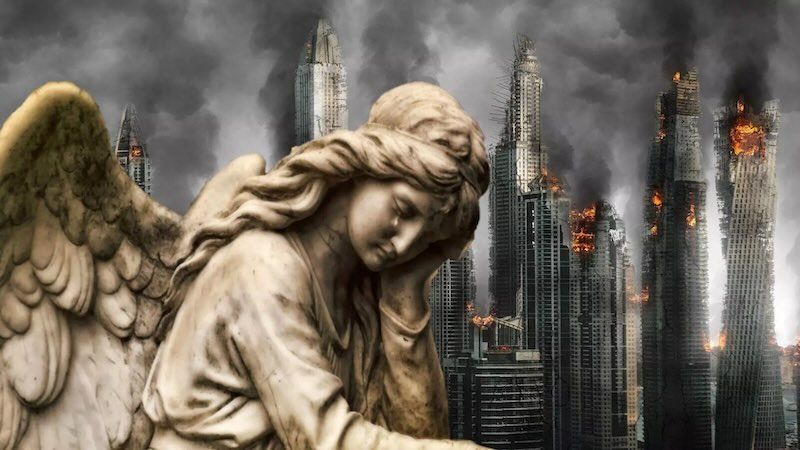
But suppose, for a moment, that this time there are no such comforting measures, and, there being none, having to face this possibility: that this pandemic is the end of the world as we have come to know it.
Imagining into this space calls for an entirely different measure, one that brings to mind the collapse of world views. Such historical measures like the fall of the Roman-Greco classical world in the fifth century, which had lasted more than a thousand years, or the medieval Christian world that followed it and ended after a thousand years, are pivots when the very foundations of a way of living fall away. Think of Galileo looking at the moon in 1609 through his primitive telescope and seeing the supposed perfection of the heavens to be corrupted like the earth. Or even earlier than Galileo, when the golden dome of heaven visible on the artist’s canvas began in the 15th century to be replaced by the blue sky, erasing the differences between the sacred and the profane.
Were there some who felt the ground of their familiar world view shaking beneath their feet, while perhaps most went about their daily round as usual?
Is the ground of the world as we know it giving way?
Before we leap ahead too quickly to return to the world as we have known it, we need to attend to what is ending if we are not to repeat those practices that have unleased COVID-19. We need to attend to the ground of those belief systems that have made us so distant from nature and stay with the grief of this ending, allowing our sorrow to sow seeds of a new beginning.
Arundhati Roy, master story-teller, says it this way:
“Historically, pandemics have forced humans to break with the past and imagine their world anew. This one is no different. It is a portal, a gateway between one world and the next. We can choose to walk through it, dragging the carcasses of our prejudice and hatred, our avarice, our data banks, and dead ideas, our dead rivers and smoky skies behind us. Or we can walk through lightly, with little luggage, ready to imagine another world. And ready to fight for it.”
The grieving process is a first step, a necessary step, in imagining a new world!
Enjoy all the essays in the series Sixteen Psychological Reflections on COVID-19.
You might also enjoy Robert Romanyshyn’s course Reflections on Ecology and Soul. In this course, Robert takes us on a journey into the depths of the soul of the world and into those places where nature, psyche, technology, and humans meet.
Share
Robert Romanyshyn
Robert D. Romanyshyn is an Emeritus Professor of Clinical Psychology at Pacifica Graduate Institute, an Affiliate Member of The Inter-Regional Society of Jungian Analysts, and a Fellow of the Dallas Institute of Humanities and Culture. He is also a Core Faculty Member at Jung Platform.
Other blog posts

Jung Platform is an online education space that offers a range of depth psychological and spiritual perspectives. Our courses and talks explore the journey of life with guidance from highly regarded teachers.
We are passionate about offering practical, life-enhancing tools and opportunities to connect with others on this path. Our aim is to help people connect to their own soul, so they can live more fully and colorfully.
Stay inspired.Get our magical updates.
Thank you for signing up!
FEATURED LINKS
-
About us
-
Blog
-
Ambassadors
-
Faculty
-
Jungian Terms
-
Cookies
-
Privacy
-
FAQ
-
Terms of Use
-
Contact
-
Jung Platform Español
-
Headquarters in Salt Lake City, Utah
-
info@jungplatform.com
-
Copyright © 2026