
Robert Romanyshyn
COVID-19: Apocalypse Now?
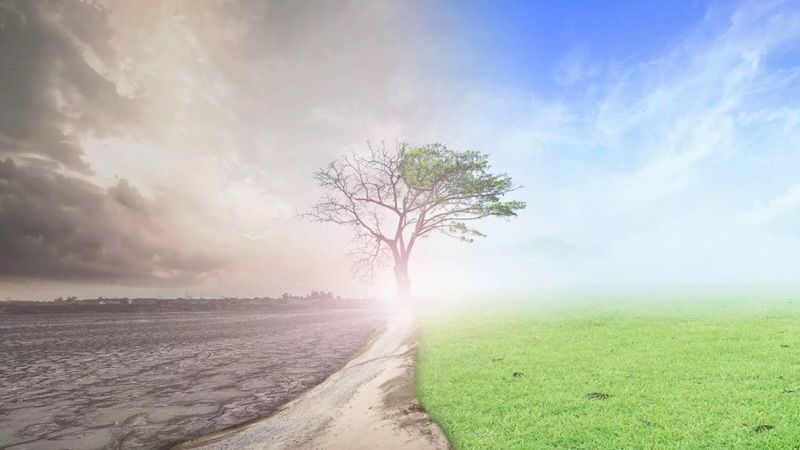
This is the first blog post in the series Sixteen Psychological Reflections on COVID-19 by Robert Romanyshyn
Every day seems to bring in its wake a creeping sense of apocalypse that is haunting our individual and collective lives. Apocalypse is one of those harrowing words that seem to foretell disaster. Are we on the edge of a global catastrophe?
What is in a word, and specifically such a loaded word like apocalypse?
Is it an apt term for COVID-19?
I begin these psychological reflections with this question because how we think and speak about events contributes to their realization.
If you dig into the roots of a word, you find the soil of its soul, its original meaning that bursts forth as an inspiration with its appeal or even its demand to be responsive to some surprising epiphany. The word apocalypse is such a surprise, for its origins describes the lifting of a veil or, we could say, the parting of a curtain. An apocalyptic moment then, is one that reveals what has been concealed. In this context, the word describes an action that is neither harrowing nor benign. It describes an action that is transformative. Here is an example of such a moment.
Not too long ago while I was on the isle of Iona in Scotland, I returned to a place I had visited more than forty years earlier—the cave on the uninhabited island of Staffa where the crashing of the sea against the walls of the cave inspired Felix Mendelssohn’s 1829 Fingal’s Cave Overture. The path to the cave is steep and slippery, but the memory of that earlier moment drew me on, and in the splendid isolation of that echo chamber I experienced again Mendelssohn’s Overture as the voice of the crashing waves against the hollowed-out walls of the cave.
In this context, apocalypse describes the fundamental character of the human imagination to experience events and things not just as they are, but also as they might or could be. Without Mendelssohn, the waves are just waves. Without the sound of those waves crashing against the rocks, a sound that imprinted itself on my soul for forty years and led me to that return, the Overture could not have been written.
There is, we might say, a conspiracy between events and the human imagination, a breathing together. In this con-spiracy something new is created. Imagine that moment in 1829 as Mendelssohn enters the cave, a curtain parts to reveal a hidden possibility. In such moments a potential that is veiled is uncovered. We might even imagine that those crashing waves were waiting for someone like Mendelssohn to give them their voice, to bring them more fully into what they are. Moreover, uncovered in this way, the cave and its music can never not be that way. Like Van Gogh’s painting ‘Starry Night,’ having been moved by it, one never can not see that potential in the night sky glowing with stars.
In the context of its root meanings, such moments are fittingly described as apocalyptic. Moreover, such moments occur more frequently than we realize. They can happen unexpectedly as an eruption, as it were, of the extraordinary nestled within the ordinary, when, for example, the sound of a morning dove is a poem or an image in a painting. Nothing in such moments is a harbinger of catastrophe.
COVID-19 certainly feels like an apocalyptic moment. But if we regard it only as a harrowing foretelling of catastrophe, then we are certain to invite a sense of doom even as we struggle against it.
If, however, we remember the curtain rising, or the veil parting, then we open a possibility to imagine COVID-19 as a crisis that is also an opportunity. These blog posts are a series of invitations to do so.
The film Dark Waters released in 2019 is an example of how an apocalyptic event can be the occasion to imagine and listen into COVID-19 in another way.
Based on a true story that began in 1999, the film recounts the 16-year legal battle of Robert Bilott, the lawyer who sued DuPont for poisoning the waters of Parkersburg, West Virginia. That story is all too familiar today. In spite of Bilott’s success against a corporate giant like DuPont, the negligent disregard of corporate culture goes on, as the story of the toxic water in Flint, Michigan came to national attention in 2014.
In the film, there is a moment when Bilott is told by a chemist that the chemical that Dupont has been releasing into the water supply of Parkersburg, affecting 70,000 people, causing cancers, birth defects as well as killing livestock, is a human creation. In the conversation, the chemist uses the word Frankenstein to describe the process.
At the end of the film, we learn that Teflon, one example among many other commercial and profitable applications, is now estimated to have spread to 99% of all people living on the planet.
Better living through chemistry!
That is a variation of Dupont’s slogan!
Better living through man-made technological abilities that are creating apocalyptic consequences?
Is it a contemporary version of Victor Frankenstein’s dream to be a new creator god?
It is a dream that is killing us!
It is a dream that is becoming a nightmare!
Victor Frankenstein’s primitive laboratory is now housed in corporate structures whose profit line trumps human well-being. In fact, the story of Frankenstein has been the impetus for these psychological reflections on COVID-19 and the thread that ties these blogs together.
This first reflection on the COVID-19 pandemic and those that follow are not arguments to be digested. They are invitations to think in a psychological way that attends to the unconscious dynamics that have shaped our world view, the mythic contexts of that world view, and the cultural-historical conditions that gave rise to it. Throughout these musings, contemporary events like the film Dark Waters show that, while the world view continues to inform our actions in the time of pandemic, it is unsustainable.
The pandemic world is a global crisis that presents all humanity with a danger and an opportunity. COVID-19 is an apocalyptic moment of change and transformation. The veil through which we have designed a world that is in opposition to nature is ending. The possibility of another world view in which we are a part of nature and not apart from it is, perhaps, beginning.
Dare we be midwives to this possibility and take up this opportunity?
Dare we not do so?
Enjoy all the essays in the series Sixteen Psychological Reflections on COVID-19 by Robert Romanyshyn.
Share
Robert Romanyshyn
Robert D. Romanyshyn is an Emeritus Professor of Clinical Psychology at Pacifica Graduate Institute, an Affiliate Member of The Inter-Regional Society of Jungian Analysts, and a Fellow of the Dallas Institute of Humanities and Culture. He is also a Core Faculty Member at Jung Platform.
Other blog posts

Jung Platform is an online education space that offers a range of depth psychological and spiritual perspectives. Our courses and talks explore the journey of life with guidance from highly regarded teachers.
We are passionate about offering practical, life-enhancing tools and opportunities to connect with others on this path. Our aim is to help people connect to their own soul, so they can live more fully and colorfully.
Stay inspired.Get our magical updates.
Thank you for signing up!
FEATURED LINKS
-
About us
-
Blog
-
Ambassadors
-
Faculty
-
Jungian Terms
-
Cookies
-
Privacy
-
FAQ
-
Terms of Use
-
Contact
-
Jung Platform Español
-
Headquarters in Salt Lake City, Utah
-
info@jungplatform.com
-
Copyright © 2026