
Craig Chalquist
Those Family Patterns!
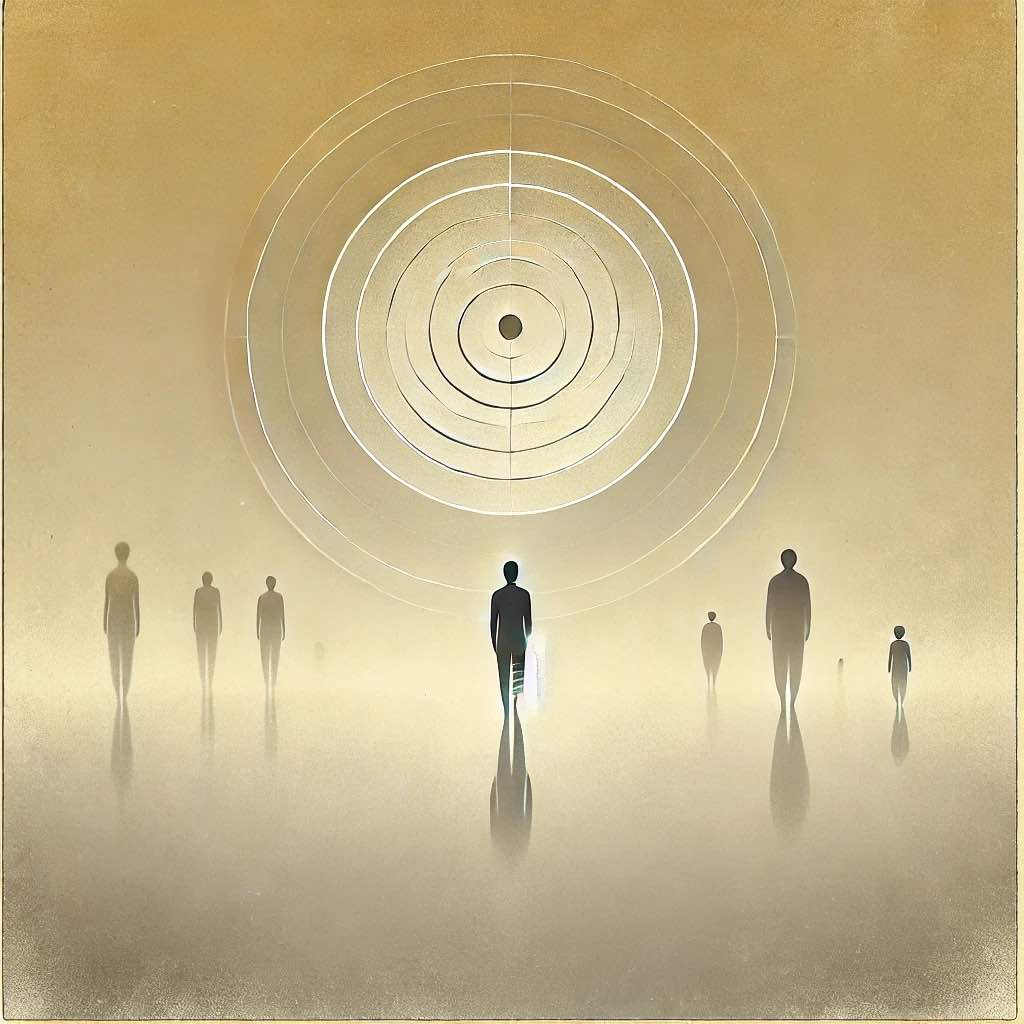
Did going home for the holidays ever feel like instant age regression? Do you get into the same old arguments and frustrations with family members? Or carry these kinds of struggles into other areas of your life?
We all do at some point. But our attempts to individuate beyond our family past can fall short if they don't take family dynamics into account.
Jung knew this. During Jung's conversations with Aniela Jaffe to create Memories, Dreams, Reflections, Jung spoke of a kind of "family karma" that persists until we take it on consciously. He also said his life in part was an attempt to address questions which his ancestors left unanswered.
When I trained and then practiced as a family therapist, I was gratified to learn how much the fields of depth psychology and Family Systems Therapy could offer each other. The covert roles and rules, the difficult interactions and activated complexes, the emotional legacies both personal and familial: these and other forces grow visible as we switch lenses back and forth, now seeing the individual level of how we feel and react, and now the familial level.
Thomas Moore expresses it well in Care of the Soul: "If we were to observe the soul in the family by honoring its stories and by not running away from its shadow, then we might not feel so inescapably determined by family influences."
Including those exasperating interactions that spin and spin inside us and between us decade after decade despite all our attempts to halt them.
My Jung Platform class Archetypal Family Systems will draw on Jungian psychology and Family Systems to examine those repeats through the alchemical lens of Circulatio, the operation in which a substance is circulated and recirculated until the essence of it is refined.
Although this is not a class mainly for clinicians, case examples help us go deeply into those repetitive interactions (inner and outer) that drive us all mad. We will look at unconscious family roles (including their archetypal motifs) with an eye on the myths and archetypes lurking behind them, consider how family history influences individuation, and watch how tending intergenerational traumas can lead to repair and renewal.
Meanwhile, here is an experiment to try out:
Reimagine a past family visit: you as an adult going home, or going wherever family members you hadn't seen for a while gathered. Remember how you felt, acted, and interacted with others. Once you have a solid sense of that memory, step outside it and ask: To what age does such a psychology belong? In other words, how old did you feel? And the second step: Why that age? Why is part of me still there?
By reflecting on how the past occupies the present, we gain a sense not only of the persistence of family dynamics, but a hint about how these infuriating repeats are also bids to individuate.
In his course Archetypal Family Systems, invites you to explore the deeper patterns shaping family life. Learn more and sign up here.
Share
Craig Chalquist
Craig Chalquist, Ph.D. is a depth psychologist and storyteller with a background in Family Systems Therapy. He teaches at the California Institute of Integral Studies and at Pacifica Graduate Institute, where he was formerly the associate provost. He has also presented at various Jungian institutes and societies.
Other blog posts

Jung Platform is an online education space that offers a range of depth psychological and spiritual perspectives. Our courses and talks explore the journey of life with guidance from highly regarded teachers.
We are passionate about offering practical, life-enhancing tools and opportunities to connect with others on this path. Our aim is to help people connect to their own soul, so they can live more fully and colorfully.
Stay inspired.Get our magical updates.
Thank you for signing up!
FEATURED LINKS
-
About us
-
Blog
-
Ambassadors
-
Faculty
-
Jungian Terms
-
Cookies
-
Privacy
-
FAQ
-
Terms of Use
-
Contact
-
Jung Platform Español
-
Headquarters in Salt Lake City, Utah
-
info@jungplatform.com
-
Copyright © 2026