
Lans Smith
Wolfram von Eschenbach’s Parzival: Parzival and Condwiramours
This article is Part 4 in a series about The Grail Romances of the Middle Ages and the Individuation Process by Lans Smith
Parzival grows up alone, far from the court, with his mother, who wants to prevent the boy from ever becoming a knight, since his father had been killed during the Crusades. One morning, three knights crash through the woods where Parzival is hunting. He thinks the knights are devils, because of the terrific noise they make, but when he sees their glittering armor and scarlet tunics shining in the sunlight, he thinks they are angels, or even God Himself (since his mother had told him that God is Light).
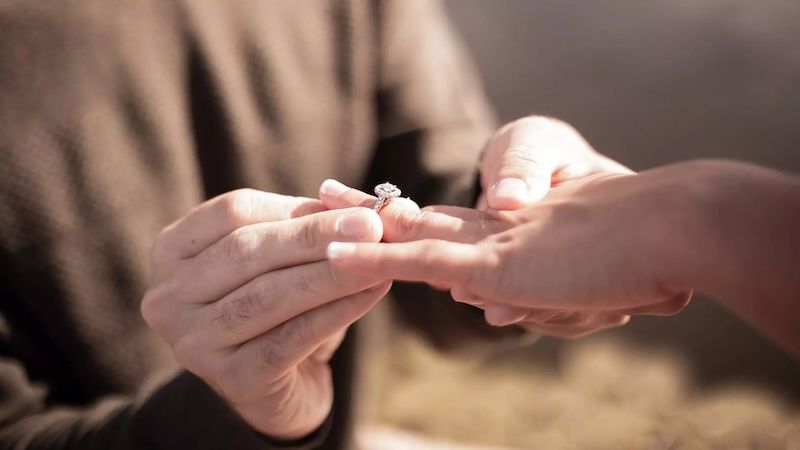
When he tells his mother, he wants to become a knight, she dresses him like a hick and sends him riding off on an old nag, hoping such attire will deny him access to Arthur’s court. She also gives him a crash course in courtly love: take a kiss and a maiden’s ring first chance he gets. So, on his way to Camelot, Parzival comes upon a Lady alone in a pavilion. He kisses her, steals her ring, and devours all her food before leaving her alone at the mercy of her jealous, abusive husband.
The next woman in Parzival’s life is Condwiramours, his bride. Soon after the marriage, Parzival says he asks permission to go see his mother. Parzival’s regressive longing will lead him to the Grail castle itself, as if there were a spiritual mystery buried in the heart of his mother complex—an archetypal goddess, the Grail Maiden herself.
Parzival rides all day long, praying to God that he might find his mother alive and well, until at last he comes to a river.
“Ah, almighty Lord!” he exclaims, “If I could cross this water, I fancy, I’d find my mother on the other side, if she’s still alive.”
She isn’t.
But, in psychological terms, his mother still lives in his unconscious, weaving the web of his fate; she is the buried source of those complexes which compel his destiny, but complicate his marriage.
A fisherman directs Parzival to the Grail Castle. He is beautifully dressed, wearing a hat of peacock feathers which suggests the alchemical symbolism of death and rebirth, and the Christian symbolism of the Resurrection.
Inside the Grail Castle, there is a hall with a hundred chandeliers, with as many candles on each, above a hundred couches, four knights seated on each. All surround the fireplace in the middle, where we see the Maimed King seated in a sling.
A page then runs out of the kitchen carrying a bleeding lance around the great hall, accompanied by much weeping. Through another steel door at the end of the Hall comes a pair of noble maidens, with garlands of flowers in their hair, wearing brown dresses, and carrying golden candelabra. A duchess and her companion, similarly dressed, come next, carrying two ivory trestles. Together with the flower maidens, they form a group of four, and bow to the lord of castle lying in his sling by the fireplace.
Four more pairs of ladies then enter, wearing robes of green samite, four of them carrying large candles, and four carrying a table cut from a garnet-hyacinth, which they set on the ivory trestles. This group of eight maidens bows to the lord. Two princely ladies, each carrying silver knives, then enter, preceded by four virgins, each bearing a light. This group of six bow before the lord seated in the sling, before joining the other twelve maidens. Six more maidens now advance, dressed in brocade of Nineveh carrying vials of pure glass with burning balsam.
The entire castle is a magnificent mandala radiating around the Grail by the fire in the center, the still point of the turning world, surrounded by groups of four, which reiterate the mystical quaternity. There are four knights per hundred tables, which we can imagine symmetrically arranged in groups of twenty-five in each of the quadrants of the Hall; there are four knights per trolley bearing golden cups, each of which establishes a new center at each of the tables. The maidens themselves form two groups of twelve on either side of the Grail Maiden. It is a grand symbol of wholeness.
In your journal, remember a mysterious occasion that seemed very important, but which you did not understand at the time. Reflect upon its meaning in your life.
Share
Other blog posts

Jung Platform is an online education space that offers a range of depth psychological and spiritual perspectives. Our courses and talks explore the journey of life with guidance from highly regarded teachers.
We are passionate about offering practical, life-enhancing tools and opportunities to connect with others on this path. Our aim is to help people connect to their own soul, so they can live more fully and colorfully.
Stay inspired.Get our magical updates.
Thank you for signing up!
FEATURED LINKS
-
About us
-
Blog
-
Ambassadors
-
Faculty
-
Jungian Terms
-
Cookies
-
Privacy
-
FAQ
-
Terms of Use
-
Contact
-
Jung Platform Español
-
Headquarters in Salt Lake City, Utah
-
info@jungplatform.com
-
Copyright © 2026